
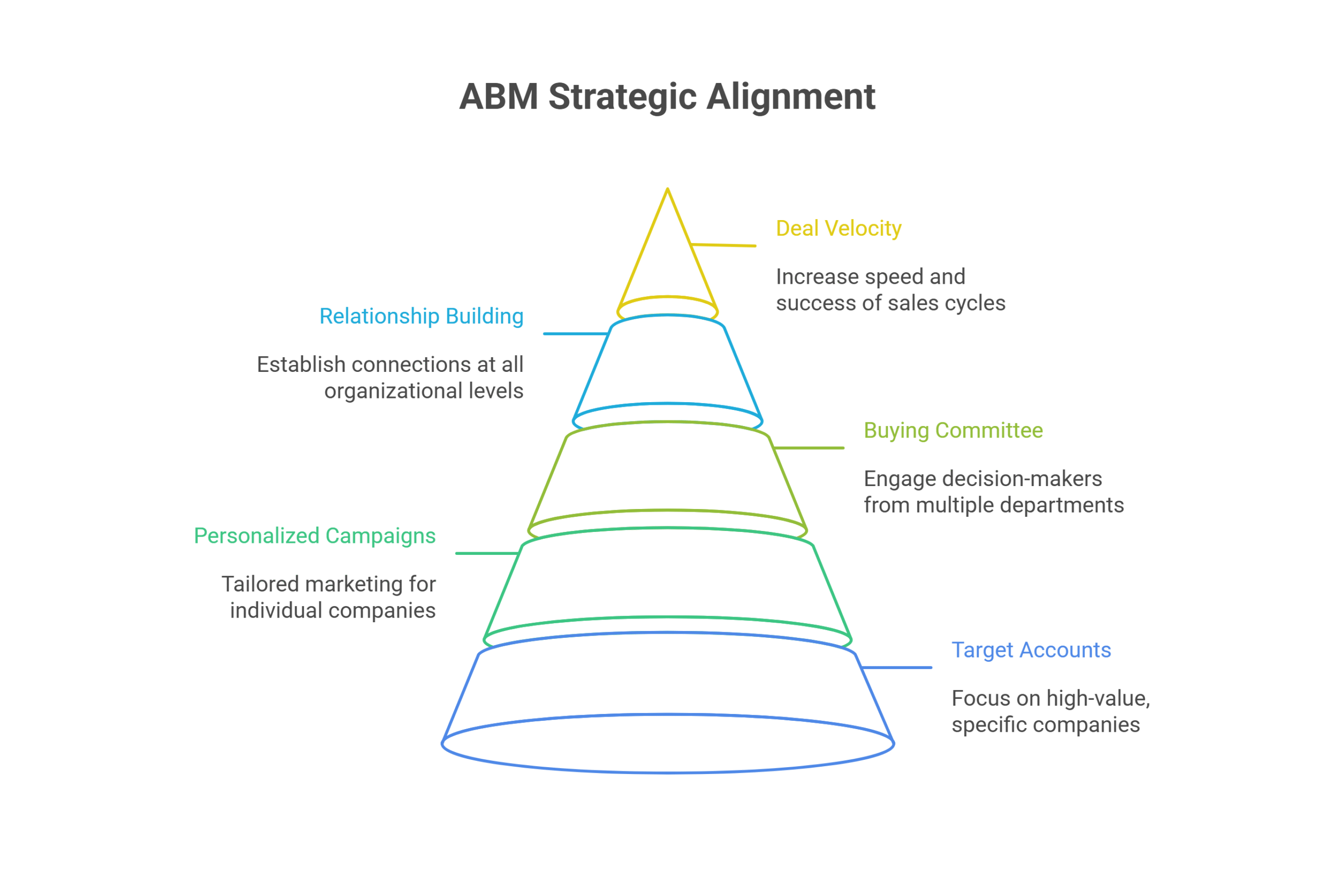
Mastering Hyper-Personalized Account-Based Marketing (ABM)
Optimizing B2B sales cycles through highly personalized strategies for key accounts. Drive engagement and measurable ROI in the US market.

Achieving true impact in B2B marketing demands a shift from broad campaigns to a focused, account-centric approach. My experience working with growth-oriented technology firms, particularly in the US market, has shown that generic outreach rarely converts top-tier accounts. Instead, a deeply tailored strategy that speaks directly to specific pain points and aspirations within an organization yields tangible results. This requires understanding not just the company, but also the individuals within it.
Overview
- Hyper-Personalized Account-Based Marketing (ABM) targets specific high-value accounts with bespoke campaigns.
- Success relies on profound insights into target companies and their decision-makers.
- Data collection and firmographic analysis form the bedrock of effective ABM strategies.
- Content must be customized to address unique challenges and roles within each account.
- Multi-channel execution ensures messages reach key stakeholders through preferred platforms.
- Regular performance measurement and adaptation are critical for continuous improvement.
- Sales and marketing alignment is fundamental for seamless account progression and revenue generation.
Understanding the Core of Hyper-Personalized Account-Based Marketing (ABM)
Hyper-Personalized Account-Based Marketing (ABM) is not merely about addressing an individual by name. It’s about crafting an entire marketing and sales journey that resonates with the specific needs, structure, and challenges of a single, high-value account. From the initial research phase to content creation and outreach, every touchpoint is custom-built. My team learned early on that a one-size-fits-all approach to enterprise clients often failed. We began by meticulously identifying ideal customer profiles (ICPs) – accounts that genuinely benefited from our solutions and offered significant revenue potential.
This involves deep dives into target companies’ financial reports, industry news, hiring patterns, and technology stacks. We also profile key stakeholders: who are they, what are their roles, what metrics drive them, and what problems keep them up at night? This intelligence gathering helps us segment accounts not just by industry, but by their unique situations. For instance, a healthcare provider facing regulatory changes requires different messaging than one focused on patient acquisition, even if both need the same core software. This granular understanding is the secret sauce behind true hyper-personalization, moving beyond basic demographic data to genuine empathy and insight.
Building a Robust Data Foundation for ABM Success
The effectiveness of any ABM initiative hinges on the quality and depth of its data. Without precise, actionable intelligence, personalization remains superficial. Our early challenges often stemmed from fragmented data sources. We corrected this by integrating CRM, marketing automation platforms, and external data providers. This unified view allowed us to create detailed account profiles, tracking everything from organizational charts to recent news mentions and technology usage.
A strong data foundation enables proactive engagement. For example, if we see a target account in the US hiring aggressively for a specific role, we can infer a new strategic direction or a looming challenge. This insight allows us to tailor our outreach to that specific context, offering solutions directly relevant to their evolving situation. We also use intent data, tracking online behaviors that signal interest in our solutions or related topics. This kind of data isn’t just about knowing who to target, but when and with what specific message. This reduces wasted effort and increases the relevance of every interaction.
Executing Targeted Campaigns with Hyper-Personalized Account-Based Marketing (ABM)
Once target accounts are identified and data is compiled, the execution phase of Hyper-Personalized Account-Based Marketing (ABM) begins. This is where personalized insights translate into bespoke campaigns. We develop custom content assets – case studies featuring similar companies, whitepapers addressing specific industry challenges, or even personalized video messages from sales reps. Each piece speaks directly to the account’s identified pain points and the individual stakeholder’s role.
Campaigns typically span multiple channels. We use personalized emails, targeted LinkedIn ads, direct mail packages, and even orchestrated sales calls. The goal is to surround the account with consistent, relevant messaging across their preferred communication channels. For a large financial services firm, for instance, we might craft a custom industry report, sponsor a virtual event on a topic critical to their operations, and then follow up with a personalized email sequence that references their specific challenges and competitive landscape. Close collaboration between sales and marketing is crucial here; sales provides frontline intelligence, and marketing creates the tailored assets and orchestrates the delivery. This synergy ensures the messaging is not only personal but also timely and impactful.
Measuring Impact and Iterating in Hyper-Personalized Account-Based Marketing (ABM)
Measuring the return on investment for Hyper-Personalized Account-Based Marketing (ABM) requires tracking specific account-level metrics rather than broad campaign performance. We look at engagement rates from target accounts, pipeline velocity for those accounts, and ultimately, closed-won revenue from our identified ABM targets. Early on, we sometimes made the mistake of applying general marketing KPIs to ABM, which didn’t truly reflect its unique value. Now, our dashboards focus on account progression and influence.
We analyze which personalized assets perform best for different roles and industries. If a specific direct mail piece consistently generates meetings with C-suite executives, we replicate that success. If certain email sequences stall, we revise them immediately. This iterative process is vital. ABM is not a set-it-and-forget-it strategy; it requires continuous optimization based on real-world feedback and performance data. We hold weekly syncs between marketing and sales to review account progress, discuss challenges, and adjust our strategies. This agile approach ensures our hyper-personalization efforts remain sharp, relevant, and effective in driving predictable revenue growth.


