
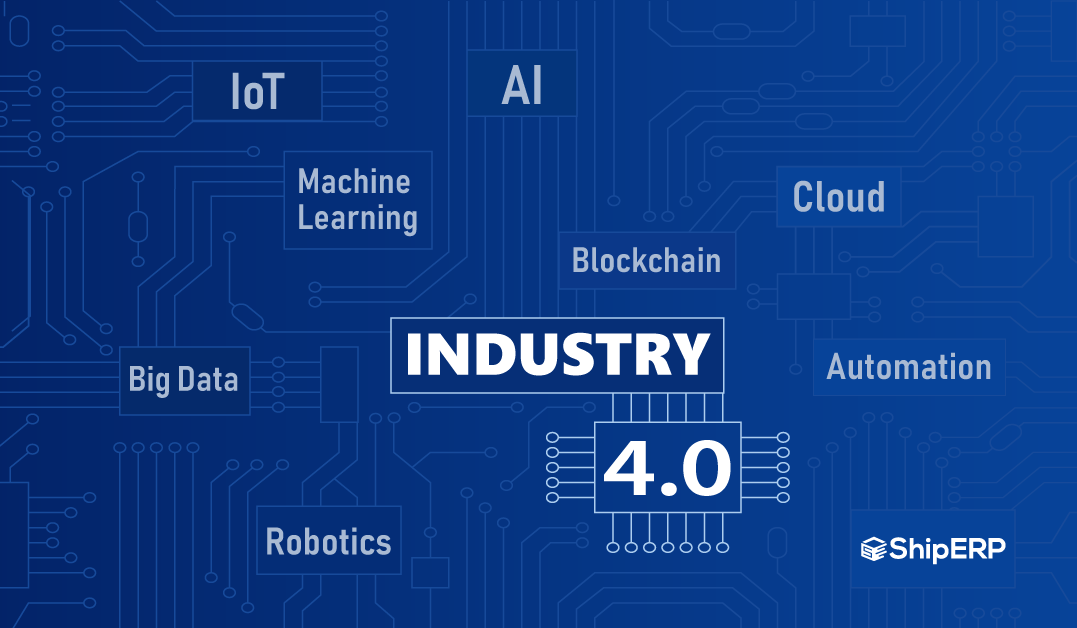
The Key Drivers Behind Industry 4.0 Growth
Explore the core forces fueling the rapid expansion of Industry 4.0. Learn about the technological and economic drivers reshaping global manufacturing.
Key Takeaways
- Connectivity and Data: The proliferation of IoT devices and widespread internet access generates the vast data needed for smart systems.
- Artificial Intelligence (AI): AI and machine learning provide the analytical power to turn data into actionable insights for automation and optimization.
- Cost Reduction and Efficiency: Businesses are adopting Industry 4.0 technologies to drastically cut operational costs and boost productivity.
- Government and Industry Support: Global initiatives, including significant investment in the US and abroad, accelerate the adoption curve.
The term Industry 4.0, often called the Fourth Industrial Revolution, describes the current trend of automation and data exchange in manufacturing technologies. It includes cyber-physical systems, the Internet of Things (IoT), industrial IoT (IIoT), cloud computing, cognitive computing, and artificial intelligence (AI). This revolution fundamentally changes how companies produce, improve, and distribute their products. It’s not just an incremental step; it represents a seismic shift in industrial operation, driven by a convergence of powerful technological and economic factors.
For businesses looking to remain competitive, understanding the forces behind this rapid growth is crucial. These drivers explain why organizations across the globe are pouring resources into smart factory initiatives, digital twins, and advanced robotics.
The Key Drivers Behind Industry 4.0 Growth: Technology
The foundation of Industry 4.0 is built upon several interconnected technological advancements that have matured simultaneously. Without these tools reaching critical mass, the vision of the smart factory would remain purely theoretical.
The Industrial Internet of Things (IIoT) is perhaps the most visible enabler. IIoT refers to the network of connected sensors, instruments, and other devices networked with industrial applications, including manufacturing and energy management. These devices generate a constant, massive stream of data about every facet of the production process—from machine temperature and vibration to inventory levels and product quality. The sheer volume and velocity of this “Big Data” necessitate new processing methods.
This is where Cloud Computing and Edge Computing come into play. Cloud infrastructure provides the scalable, on-demand computational power and storage required to manage and analyze IIoT data. Meanwhile, Edge Computing allows for immediate, low-latency processing of critical data right where it’s collected—on the factory floor—enabling real-time decision-making for tasks like predictive maintenance and immediate quality control.
Furthermore, Advanced Robotics and Additive Manufacturing (3D printing) accelerate the physical capabilities of the new industrial age. Collaborative robots, or ‘cobots,’ work alongside human employees, increasing precision and safety. Additive manufacturing offers unprecedented flexibility in design and localized production, minimizing waste and speeding up prototyping.
The Key Drivers Behind Industry 4.0 Growth: Economic Imperatives
While technology provides the means, economic pressures provide the motivation. Companies aren’t adopting Industry 4.0 just because the technology exists; they’re doing it to survive and thrive in a fierce global market.
A major driver is the need for Increased Operational Efficiency and Cost Reduction. Industry 4.0 systems offer unparalleled visibility into the supply chain and production process. By using predictive maintenance, for example, companies can service equipment before it fails, drastically reducing costly unscheduled downtime. Optimization algorithms streamline energy consumption and material usage, cutting utility and raw material costs. This focus on optimization directly impacts the bottom line, making the initial investment in smart technologies easily justifiable over time.
Another powerful economic force is the demand for Mass Customization. Modern consumers expect products tailored to their specific needs without waiting months or paying premium prices. Traditional production lines struggle with this, but flexible, digitally-integrated Industry 4.0 factories can reconfigure quickly to produce small, highly customized batches efficiently. This agility provides a significant competitive advantage.
The Key Drivers Behind Industry 4.0 Growth: Talent and Skill
The human element, counterintuitively, is a primary driver of the shift to Industry 4.0. The increasing complexity of modern manufacturing processes demands highly skilled labor capable of managing sophisticated digital systems.
The scarcity of specialized talent in areas like data science, cybersecurity, and robotics is pushing manufacturers toward automation. Companies realize that smart machines and AI can handle repetitive, complex, or dangerous tasks, allowing existing human workers to focus on higher-value activities—namely, system oversight, strategic planning, and innovation. This shift improves Workforce Productivity and addresses the skills gap by changing the nature of the work rather than simply replacing workers.
Furthermore, the need for better Data-Driven Decision Making is driving adoption. In the past, decisions were often based on intuition or delayed reports. With Industry 4.0, real-time data analysis gives managers accurate, immediate feedback on production performance, inventory, and supply chain logistics. This ability to make quick, informed decisions based on hard evidence is a significant business accelerant.
The Key Drivers Behind Industry 4.0 Growth: Global Competition and Government Support
The race to adopt Industry 4.0 technologies is not confined to individual corporations; it’s a matter of national economic strength. Global competition serves as a strong external catalyst. Countries that lead in Industry 4.0 implementation will likely dominate future global manufacturing.
Government Initiatives and Investment are playing a critical role in accelerating adoption. In the US, various federal and state programs provide funding, tax incentives, and research partnerships to encourage American manufacturers to digitize their operations, recognizing the strategic importance of domestic technology leadership. Similar substantial public-sector support exists across Europe and Asia, creating a global arms race in manufacturing capability.
The drive for Supply Chain Resilience has been amplified by recent global disruptions. Companies are investing in digital tools to create transparent, agile, and resilient supply chains. Digital Twins—virtual replicas of physical systems—allow companies to simulate disruptions and test mitigation strategies without risking real-world production. This focus on minimizing risk and ensuring continuity of operations is a powerful, non-negotiable driver of Industry 4.0 growth, cementing its place as the standard for future industrial operations.


